Heating Repair
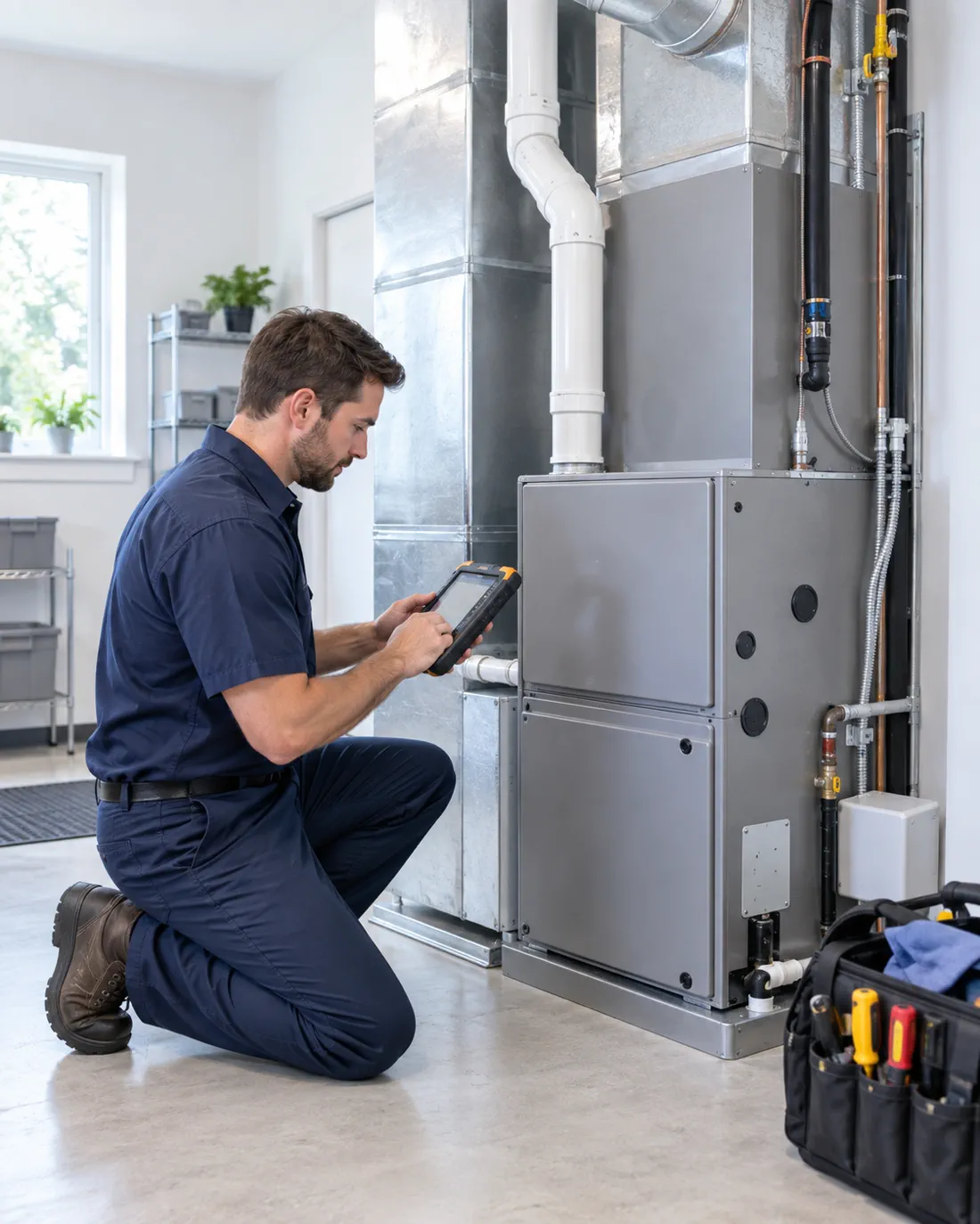
Troubleshooting for ignition, thermostat, airflow, cycling, and performance issues.
Heating service
When the furnace is struggling—or you’re planning ahead—understand the condition of the system and the options that make sense for your home.
Heating solutions
Troubleshooting for ignition, thermostat, airflow, cycling, and performance issues.
Compare replacement when reliability, comfort, repair cost, or age changes the equation.
Plan equipment, airflow, controls, and installation details as one connected comfort system.

When to ask for help
Safety first: If a carbon-monoxide alarm sounds or you smell gas, leave the area and contact emergency services and the gas utility. Do not rely on a website form.
Heating FAQ
No. Age is one factor. Condition, repair history, safety, comfort, operating behavior, and future plans should also inform the decision.
It can. Duct condition, airflow, controls, insulation, and equipment sizing may all contribute. Diagnosis should look beyond the equipment cabinet.
Possibly. Heat pumps can provide heating and cooling. The right fit depends on the home, electrical capacity, existing distribution system, and comfort goals.
Plan before the next cold snap
Share the age, main problem, and timeline so the next step can be more useful.